A political party is, "an association, committee, or organization which nominates a candidate for election to any Federal office whose name appears on the election ballot as the candidate of such association, committee, or organization"(1). Political parties have been an essential part of U.S. politics, as they help differentiate the diverse political views within our country.
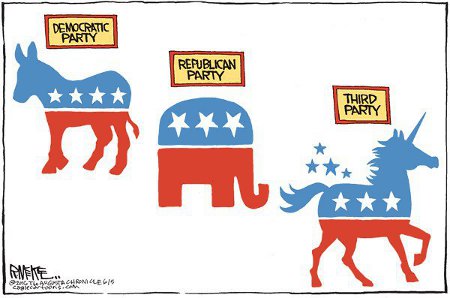
The two most prodigious political parties in U.S. politics have been the Democratic Party and the Republican Party. Of the 45 presidents in U.S. history, there have been 19 Republican presidents, and 15 Democratic presidents (2). These are not the only political parties in U.S. politics, however. Currently, there are 6 political parties other than the Democratic and Republican parties that hold positions in federal offices. These parties are: the Vermont Progressive party, Libertarian Party, Green Party, Working Families Party, Independence Party of New York, and Independent (3).
One of the burning questions in American politics is, "Who is better for the economy, Democrats or Republicans?"
According to the graph below, created by The Economist, since 1949, Democrats have had on average higher annual GDP growth. With an average annual GDP growth of 4.4%, Democrats have nearly doubled the Republican average annual GDP growth of 2.5%.

Personally, I thought that it would be the opposite, with Republicans creating more growth in the economy. With Republicans putting less regulations on businesses, they would be able to make a considerable amount of money, with minimal taxation.
Comments
Post a Comment